A smaller waistline can make loose skin more noticeable, which is why many people ask, does body contouring tighten skin? The honest answer is that it can improve the look and feel of mild skin laxity in the right person, but it is not a substitute for surgery when there is significant loose or hanging skin. The best results come from matching the treatment to your skin quality, body-composition goals, and overall wellness plan.
For adults in Wilton Manors and Fort Lauderdale who want a more refined shape without surgery or a lengthy recovery, this distinction matters. Body contouring can be a thoughtful option for areas that have been stubborn despite healthy habits, but realistic expectations are part of feeling good about the process.
Does Body Contouring Tighten Skin, or Just Reduce Fat?
Not all body contouring treatments work in the same way. Some noninvasive approaches are designed primarily to address pockets of fat. Others use energy-based technology to support collagen remodeling, which may create a firmer, smoother appearance over time. Certain treatments aim to do both.
When skin is exposed to controlled heat or other targeted energy, the deeper layers may respond by producing and reorganizing collagen. Collagen is one of the proteins that helps skin retain its structure and elasticity. Because this process takes time, skin-tightening changes are usually gradual rather than immediate.
Fat reduction and skin tightening are related but separate goals. Reducing fullness in the abdomen, flanks, thighs, arms, or under the chin can enhance definition. Yet if the skin has lost substantial elasticity, removing or shrinking fat cells alone may not make the area look tighter. In some cases, it can reveal pre-existing looseness.
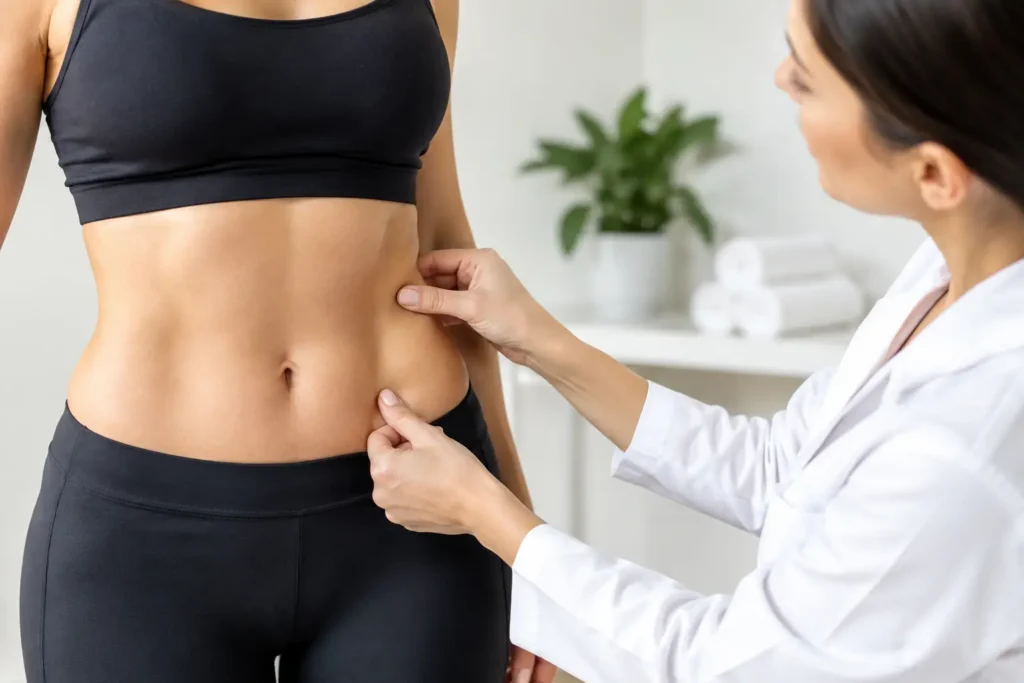
That is why a consultation should begin with an assessment of both the tissue beneath the skin and the skin itself. A personalized plan can determine whether body contouring is likely to create the improvement you want, whether weight stabilization should come first, or whether another approach is more appropriate.
When Noninvasive Contouring May Help Skin Look Firmer
Noninvasive body contouring tends to be most rewarding for people with mild to moderate laxity. You may notice a softer, less toned look around the midsection after weight changes, pregnancy, aging, or shifts in hormones. If your skin still has some natural recoil, a collagen-supporting treatment may help it appear smoother and more supported.
Results also depend on the area being treated. The abdomen and flanks are common concerns, but arms, thighs, buttocks, and the area beneath the chin can also be evaluated. Skin thickness, sun exposure, genetics, age, past pregnancies, and the amount of weight lost all affect how skin responds.
People often see the best cosmetic change when contouring is paired with stable, sustainable habits. Hydration, adequate protein, strength training, sleep, and a nutrition plan that supports a healthy weight can all contribute to the way the body looks and feels. These habits do not replace treatment, but they help protect your investment in your results.
Timing matters after weight loss
If you are actively losing a significant amount of weight, it may make sense to wait until your weight has stabilized before deciding on a contouring plan. Continued weight changes can alter the treated area and make it harder to judge your final outcome.
For people who are close to their comfortable, maintainable weight but still have localized fullness or mild laxity, body contouring may be a more natural fit. It is generally designed for shaping and refinement, not for major weight loss.
What Results Can You Realistically Expect?
A successful body contouring plan should leave you looking like yourself, just more comfortable and confident in your silhouette. Depending on the technology and treatment area, improvements may include a smoother contour, less visible fullness, a firmer appearance, or clothing that fits more comfortably.
Most noninvasive treatments require patience. The body needs time to process treated fat cells and, where applicable, build new collagen. Changes may begin to become noticeable over several weeks, with continued improvement over the following months. Some clients benefit from a series of sessions, while others need only a targeted treatment plan.
The degree of improvement is not the same for everyone. A person in their 30s with mild abdominal looseness after a modest weight change may see a different result than someone in their 60s who has experienced major weight loss and significant loss of skin elasticity. Neither situation is wrong, but each calls for an honest, individualized recommendation.
Severe loose skin, especially skin that folds, hangs, or causes discomfort, usually will not tighten enough with noninvasive body contouring alone. Surgical procedures can remove excess skin and may be the more effective option in those cases. A responsible provider will say so rather than overpromise.
The Role of Hormones, Muscle, and Wellness
Skin and body shape are not only surface-level concerns. Hormonal shifts can affect where the body stores fat, how easily it builds muscle, energy levels, sleep, and the ability to maintain healthy routines. Perimenopause, menopause, low testosterone, and age-related metabolic changes can all influence the concerns that bring someone in for body contouring.
That does not mean every contour concern is a hormone issue. It does mean that an inside-and-out perspective can be valuable. Someone struggling with fatigue, changing body composition, low libido, or difficulty maintaining muscle may benefit from a broader wellness conversation alongside their aesthetic goals.
Muscle is especially relevant because it gives the body underlying shape and support. A treatment that refines a layer of fullness can look even better when it is paired with regular resistance training and enough nutrition to preserve lean muscle. For some clients, addressing nutrient needs, energy, or hormone balance with clinician-guided care makes it easier to stay consistent with the habits that support their results.
Is Body Contouring Right for You?
A good candidate is generally in overall good health, has realistic goals, and is looking for improvement rather than perfection. You should be prepared to share your health history, medications, recent weight changes, and any implanted devices or conditions that could affect which treatments are appropriate.
During a personalized consultation, ask direct questions: Is the main concern fat, loose skin, cellulite, or all three? Is the recommended treatment intended to reduce fat, support skin firmness, or both? How many sessions are likely needed? When should results be evaluated? What happens if your skin does not respond as hoped?
Those answers help you choose care with clarity instead of being guided by before-and-after photos alone. A well-designed plan should feel supportive, comfortable, and grounded in what your body can realistically achieve.
At Abundant Wellness & Beauty, body-focused goals can be considered alongside the factors that influence how you feel every day, from weight support and skin health to energy and hormonal balance. The aim is not to chase a different body. It is to create a plan that helps you feel more at home in the one you have.
If loose skin or stubborn areas have been affecting your confidence, start with a conversation rather than an assumption. The right recommendation may be body contouring, a broader wellness plan, another aesthetic option, or simply more time for your body to settle after change. That kind of personalized guidance is often where meaningful results begin.