
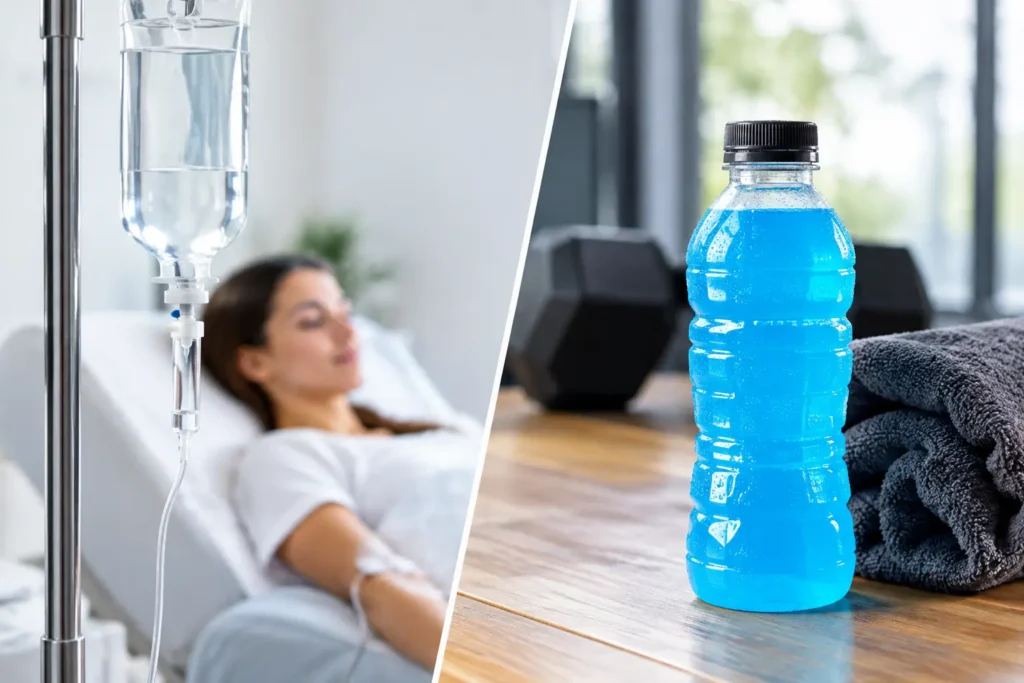
A bottle of sports drink after a long South Florida workout can feel like the obvious answer to dehydration. But if you are dealing with persistent fatigue, a stomach bug, heat exposure, or recovery that feels harder than it should, the choice is not always so simple. IV hydration versus sports drinks is less about choosing the “stronger” option and more about understanding what your body needs in that moment.
For many people, plain water, nourishing meals, and a little time are enough. For others, especially when fluid loss is significant or drinking is difficult, clinician-guided IV hydration may be a more appropriate supportive option. The most helpful choice depends on your symptoms, your health history, your activity level, and the reason you are feeling depleted.
IV Hydration Versus Sports Drinks: The Key Difference
Sports drinks replace fluids by mouth. They typically contain water, carbohydrates, and electrolytes such as sodium and potassium. When you drink one, your digestive system absorbs the fluid gradually. This works well for many people who are sweating during extended exercise, spending time outdoors in the Florida heat, or recovering from a mild, short-lived fluid loss.
IV hydration delivers sterile fluids directly into the bloodstream through a vein. Because it bypasses digestion, fluids are available more quickly. In a wellness setting, an IV may also be tailored with clinician-approved vitamins or nutrients based on an individual’s goals and health considerations.
That difference does not make IV therapy necessary for every workout, late night, or low-energy afternoon. It does mean an IV can be a valuable option when oral hydration is not practical, is poorly tolerated, or has not been enough to help someone feel recovered. A qualified clinician should always determine whether IV therapy is appropriate, particularly for people with kidney disease, heart conditions, high blood pressure, pregnancy, or medications that affect fluid or electrolyte balance.
When a Sports Drink May Make Sense
Sports drinks can be useful during or after prolonged, high-sweat activity. Think of a long outdoor tennis match, a distance run, an extended bike ride, or physically demanding work in humid weather. In those situations, you lose more than water through sweat. Sodium losses can be meaningful, and carbohydrates may help sustain energy during endurance activity.
They may also be helpful after a mild illness if you can comfortably keep fluids down. Small, frequent sips are often easier than trying to drink a large amount at once. Still, a sports drink is not automatically the best everyday beverage. Many popular options contain more added sugar than your body needs for a regular gym session or an afternoon at your desk.
For lighter exercise, water is usually the more straightforward choice. A balanced meal or snack can replace electrolytes naturally afterward. If you prefer a sports drink, look at the label and choose one that fits your activity level rather than treating it as a daily energy drink.
When Oral Hydration May Not Be Enough
There are times when drinking fluids feels difficult or simply does not keep pace with losses. Vomiting, diarrhea, intense heat exposure, or a migraine that makes nausea worse can all interfere with your ability to rehydrate effectively. Signs that deserve attention include dizziness, fainting, confusion, a racing heartbeat, very dark urine, minimal urination, or symptoms that are getting worse rather than better.
These symptoms are not a cue to self-treat indefinitely with sports drinks. Severe dehydration can require prompt medical evaluation, especially if it follows illness, heat exposure, or an injury. Emergency symptoms such as confusion, fainting, chest pain, severe shortness of breath, or an inability to keep any fluids down need urgent medical care.
For mild to moderate concerns in an otherwise stable adult, a clinician can help determine whether IV hydration is an appropriate supportive treatment. The goal is not to replace proper medical care, rest, food, or sleep. It is to provide guided fluid and nutrient support when it fits the person and the situation.
What IV Hydration Can Offer
People often seek IV vitamin therapy because they want to feel refreshed after travel, a demanding work period, time in the sun, or a stretch of low energy. An IV hydration visit also provides something a convenience-store drink cannot: an individualized conversation about why you feel depleted in the first place.
At a boutique wellness studio, that may include discussing your hydration habits, recent activity, sleep, nutrition, medications, and wellness goals. A clinician can review whether a hydration-focused IV or a vitamin-enhanced option aligns with your needs. Some clients are looking for help with recovery after a busy season; others want proactive support as part of a broader approach to energy, skin health, or healthy aging.
The experience itself can be calming. You can rest in a comfortable setting while your treatment is monitored, rather than trying to push through fatigue with another sweet drink or a large dose of caffeine. That sense of care matters, but it should be paired with realistic expectations. IV therapy is supportive wellness care, not a cure for chronic exhaustion, infection, hormonal imbalance, or an underlying medical condition.
If low energy keeps returning, it is worth looking beyond hydration. Ongoing fatigue can be connected to poor sleep, stress, nutrient deficiencies, thyroid concerns, medication effects, perimenopause, menopause, or low testosterone. A personalized plan may require a deeper conversation and appropriate medical assessment instead of repeated quick fixes.
The Trade-Offs to Consider
Sports drinks are accessible, inexpensive, and easy to use during activity. They are also noninvasive. Their limitations are that they can be high in sugar, may not be needed for shorter workouts, and depend on your body being able to absorb fluids normally.
IV hydration is more direct and can be customized under clinical guidance, but it is not a casual substitute for carrying a water bottle. It involves a needle, takes dedicated appointment time, and should be administered with appropriate screening and monitoring. Like any IV treatment, it carries potential risks, including bruising, discomfort, irritation at the injection site, infection, or fluid and electrolyte complications in people with certain medical conditions.
The best option is often neither extreme. You may use water as your everyday foundation, choose an electrolyte beverage for a long, sweaty activity, and consider clinician-guided IV support when circumstances call for something more individualized. This approach respects both convenience and safety.
Build Better Hydration Into Your Routine
The most effective hydration habits tend to be pleasantly ordinary. Drink water consistently rather than waiting until you feel parched. Increase fluids around outdoor activity and account for alcohol, caffeine, illness, and travel, which can leave some people feeling more depleted. Pair hydration with regular meals that include mineral-rich foods, protein, fruits, and vegetables.
Pay attention to patterns rather than one difficult day. Do you regularly wake up tired? Do headaches, muscle cramps, or low energy appear after heat exposure? Are you relying on sports drinks or caffeine just to get through the afternoon? Those details can help a clinician guide you toward a more personal plan.
For clients in Wilton Manors and greater Fort Lauderdale who want a supportive, clinician-guided approach, Abundant Wellness & Beauty can help explore whether IV vitamin therapy fits into your wellness routine. The right choice should leave you feeling cared for, informed, and more connected to what your body is asking for – not pressured to treat every tired day the same way.